Introducing New Integral Care Communications Tools
An interactive microlearning designed to introduce a new agency-wide messaging framework and communications toolkit. The training helps staff use clear, accessible language and easily navigate updated resources to better communicate services to the community.
-
This training was designed for all 1,200+ staff across the organization, including administrative, clinical, and executive teams. Because the updated messaging framework impacts how the agency communicates with clients and the broader community, it was important that all staff understand and apply the new approach.
-
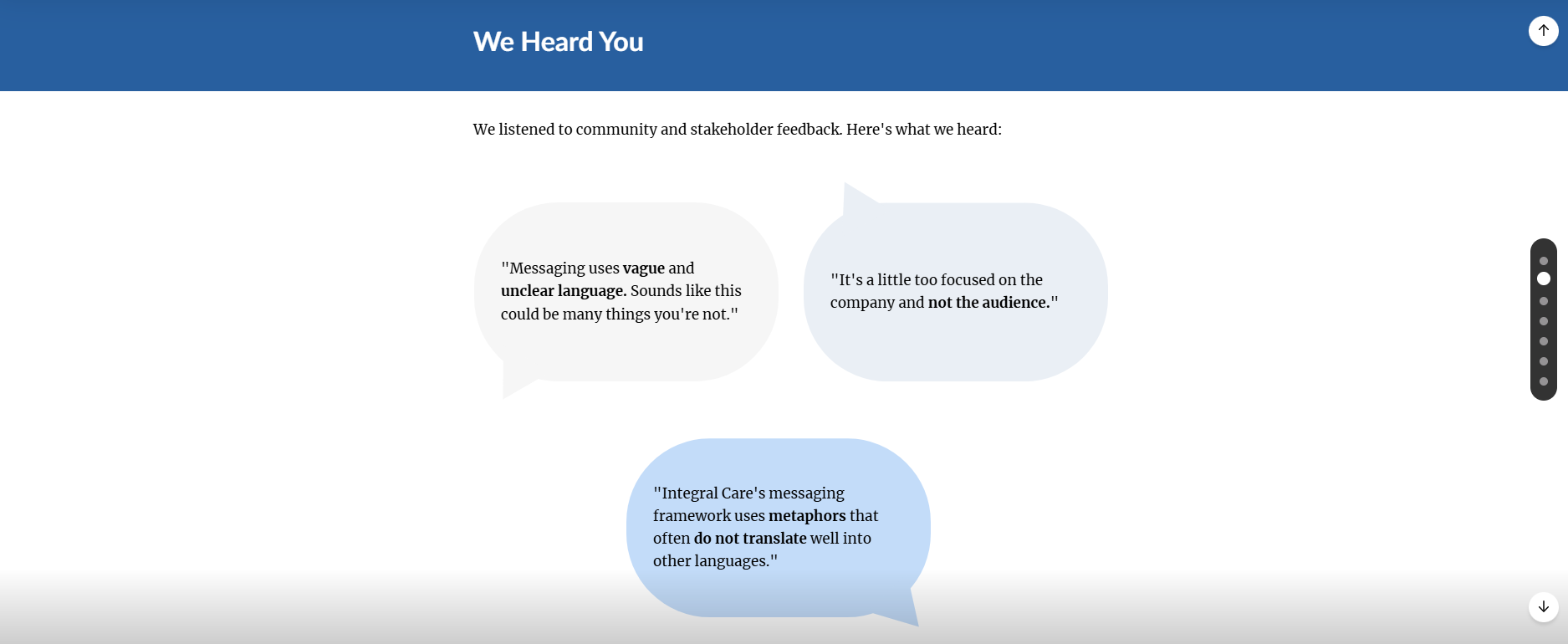
Feedback from internal and external stakeholders revealed that existing messaging was often unclear and overly metaphorical, making it particularly difficult to understand for individuals who do not speak English as a first language. Staff also struggled to locate communications resources, which were buried within SharePoint, and existing materials did not consistently meet accessibility standards. To address these gaps, the organization introduced a new messaging framework and centralized communications toolkit to improve clarity, accessibility, and reach.
-
I partnered with the Communications Director to design and develop a microlearning in Articulate. We selected this format to balance depth of content with flexibility and engagement. The process included a design document, storyboard, and iterative feedback cycles to refine content.
The training emphasizes interactivity and real-world application through reflection prompts, before-and-after messaging examples, and an interactive walkthrough of the communications toolkit. Design choices were guided by learning science principles, including chunking content, reducing cognitive load through visual organization, and using audio and visuals together to support understanding. I also incorporated accessibility best practices directly into the training experience, reinforcing the standards being introduced.
-
Staff reported that the interactive format made the content more engaging and easier to navigate compared to traditional documents. Following the rollout, the Communications team observed increased use of the messaging framework and higher traffic to the communications toolkit. The inclusion of an exit survey also created a feedback loop, allowing the team to continue refining resources based on staff needs.