Part 2: Assisting with the Self-Administration of Medications (SAMs)
An interactive eLearning module designed to prepare staff to safely assist clients with the self-administration of medications (SAMs). Through real-world scenarios and knowledge checks, learners build the skills needed to support accuracy, safety, and compliance.
-
This training was designed for direct care staff, including nurses, QMHPs, and peer support specialists, seeking certification as SAMs Trained Staff. Because participants come from varied backgrounds with different levels of medical knowledge and experience, the training needed to be accessible, clear, and applicable across roles. It is part of a three-step certification process that also includes in-person instruction and a final competency check.
-
The original training model required three multi-hour, in-person sessions, creating significant scheduling challenges for both staff and nursing facilitators. Limited availability made it difficult for employees to attend sessions, leading to delays and compliance gaps. To increase flexibility and reduce the burden on nursing staff, we identified an opportunity to convert one portion of the training into an eLearning format.
-
I partnered with the nursing team to review existing materials and designed the module in Articulate Rise using a structured storyboard and iterative feedback process. I developed all content, including visuals, narration, and assessments, with a focus on balancing clarity and depth for a mixed-experience audience.
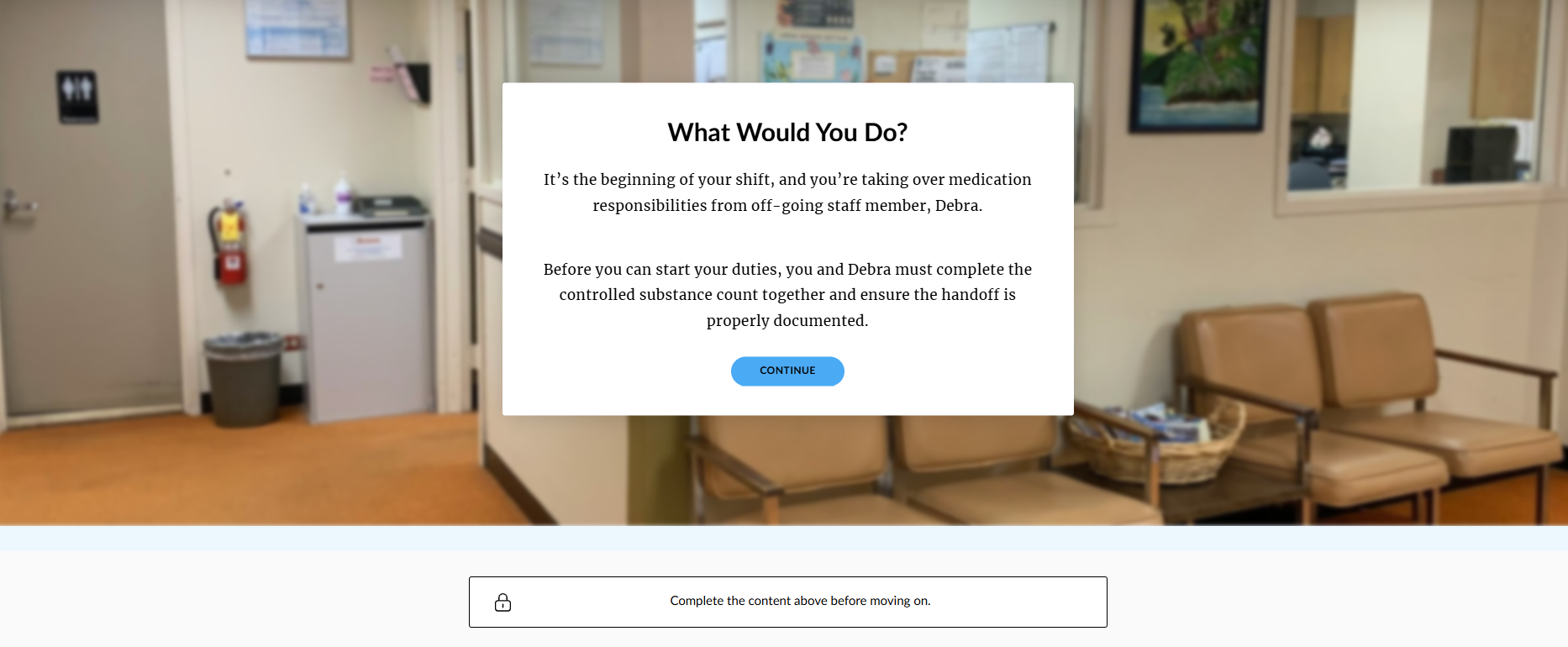
The training incorporates a variety of interactive elements, such as knowledge checks, sorting and matching activities, and a scenario-based simulation where learners navigate a shift handoff and controlled substance count. Design decisions were grounded in learning science, including chunking content, reducing cognitive load through visual organization, and embedding real-world scenarios to support application and retention.
-
Converting this portion of the training to eLearning increased flexibility for staff and reduced scheduling strain on nursing facilitators. More employees were able to complete the training, supporting improved compliance and more efficient use of time. The standardized format also ensured more consistent training delivery across all learners.